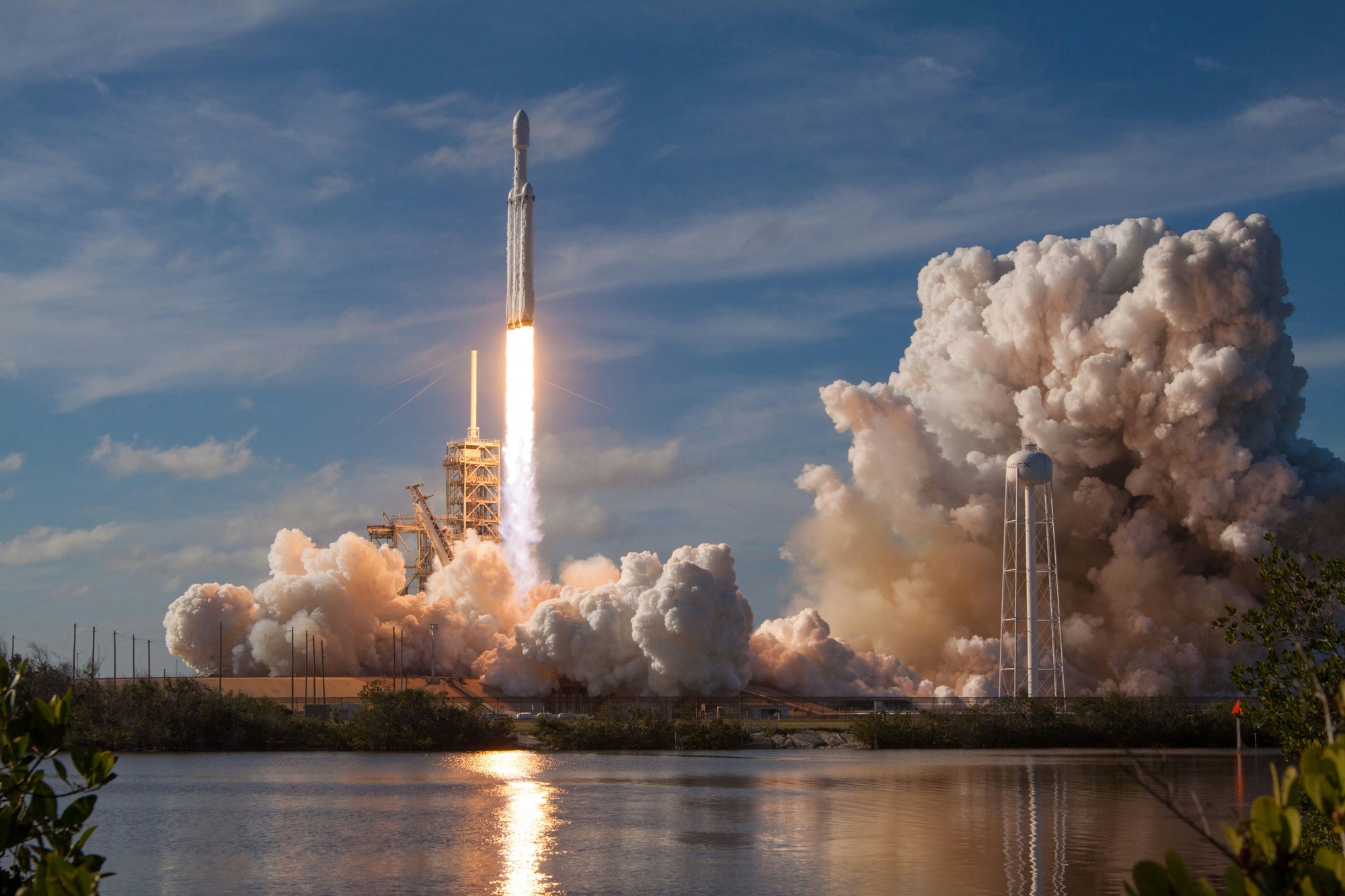
Featured Image: SpaceX
SpaceX is set to break records and make history later this month by taking the number one position as the biggest Initial Public Offering (IPO). SpaceX plans to sell 555.6 million shares at $135 apiece in a bid to break existing records by raising $75 billion.
The previous record was set at $35.4 billion in 2019 by Saudi Aracmo which means that SpaceX is targeting to more than double that amount.
This move will get Elon Musk closer to being the world’s first trillionaire with the company aiming for an ambitious $1.75 trillion valuation.
SpaceX is set to trade on the Nasdaq exchange and it’s speculated that shares may be listed as early as the 12th of June according to Reuters.
The primary coordinators are noted as Goldman Sachs, Bank of America Securities, Citigroup, Morgan Stanley, and JPMorgan.
If you’re wondering, Elon Musk is not planning to sell any of his shares. After all this is done and dusted, his 42% equity stake will be worth roughly $735 billion, which puts him in the running to be the first trillionaire.
A trillion is one million millions in case you were wondering.
Retail investors get a slice of the pie with a 30% allocation carved out through Fidelity, Robinhood, and Charles Schwab. This will be the biggest slice that goes directly to retail any IPO of this kind has ever offered.
Everyone else will buy on the open market day (June 12), and they will pay whatever price hype sets on the first day.
SpaceX Is More Than a Rocket Company
From another angle, the headline business is now the smaller piece of the story. SpaceX wrapped up a merger with Musk’s AI company in February of this year. This merger included Grok (the sometimes antisemitic chatbot), the AI infrastructure, and X which most of us still call Twitter.
The plan to include X in the merger came across as unflattering. Ad revenue on the platform fell by roughly $100 million which looks quite bad if compared to other platforms like Meta and Reddit which experienced a growth in sales within the same period.
So in summary, Elon Musk bought Twitter in 2022 and changed its name, he then merged it with xAI, and now all this combined is now baked into the IPO prospectus.
The revenue in 2025 came in at a total of $18.67 billion with a net loss of $4.9 billion. The loss can be traced back to the $3 billion that was sunk into the Starship R&D and xAI integration.
The company is taking a gamble by sinking money into infrastructure that isn’t currently in existence.
A valuation of $1.75 trillion will see investors paying about 100 times trailing revenue. Starlink makes sense and is profitable but everything else is just taking a gamble by betting on rockets, AI dominance, and the hope that space-based data centers will become a thing soon enough.
The Index Fund Problem
There’s a problem. SpaceX intends to float about 3-5% of its total shares at IPO. This means that by market cap, it would only rank behind Apple, Nvidia, Alphabet, Amazon, and Microsoft from the moment it lists.
Trying to get a company this big into passive index funds normally takes quite a lot of time. The rules governing how this should happen were created in a world where IPOs were smaller and floats were larger. Companies also needed at least a year of public earnings before pension funds got involved.
SpaceX becoming part of the scene shook those rules and index providers have been trying to make adjustments since February when SpaceX decided to start pushing for faster inclusion.
Nasdaq was the first to make adjustments. As of the 1st of May, 2026, its new rules state that newly listed companies ranked in the top 40 by market cap are allowed to enter the Nasdaq-100 after only 15 trading days.
The minimum float requirement was entirely removed for companies at that scale. SpaceX easily meets these requirements and will enter QQQ-tracking funds about three weeks after listing.
On the 26th of May, FTSE Russell followed by confirming a Fast Entry mechanism under which an IPO exceeding the Russell Top 500 market-cap breakpoint becomes eligible five trading days after listing, rather than waiting for the next quarterly review.
SpaceX’s lockup schedule (with insider shares releasing in tranches tied to earnings reports, time milestones, and stock price triggers, and Musk himself locked up for 366 days) appears designed specifically to satisfy FTSE’s new float carve-out condition. Russell 1000 inclusion, previously expected in September, now happens roughly a week after the IPO.
The S&P 500 is the only one still holding out. So far, it closed a consultation on May 28 proposing to cut the seasoning window from 12 months to six and eliminate the four-quarter profitability requirement for megacap companies.
So far, no final decision has been announced. Under the accelerated proposal, a late-June IPO still wouldn’t make SpaceX eligible until around mid-December 2026. Full S&P 500 inclusion, the benchmark that most retirement money actually tracks, likely lands in late 2026 or early 2027, not days after listing.
The Forced Buying Argument
Bloomberg Intelligence analyst Rob Du Boff estimates that S&P 500 index funds could be required to acquire 19% of SpaceX’s available float within six months of inclusion. Russell 1000 and Nasdaq-100 tracked funds together would need to acquire 24% of available shares.
This is mechanical rebalancing where every fund tracking those indexes has to buy SPCX on inclusion day, at whatever price the market has already pushed it to, because the rules say so.
To accommodate the buying, funds will sell existing constituents. Apple, Microsoft, Nvidia — every company in the index gets slightly trimmed to make room. The scale of the forced rebalancing is what makes SpaceX’s IPO the first of its kind and unlike almost any that came before it. There’s a wall of passive capital that has to follow, regardless of valuation.
The Pushback
Not everyone is happy about any of this. Critics argue that bending index inclusion rules specifically for SpaceX sets a precedent with no clean stopping point. This is an issue because OpenAI and Anthropic are both reportedly considering 2026 IPOs at valuations that would trigger similar conversations.
One market commentator quoted by Benzinga put it plainly: SpaceX hasn’t earned its seat at the table yet. The argument is that forcing passive fund managers to buy a low-float, unprofitable-at-the-aggregate-level company days after listing, at a 100x revenue multiple, because index providers rewrote their eligibility rules under pressure from bankers and asset managers, represents a structural distortion.
Forced buying, as the argument goes, doesn’t mean SpaceX is worth $1.75 trillion. It means index funds have no choice.
Morningstar made the case from the other direction. Any index claiming to represent the U.S. stock market that excludes one of the five largest companies by market cap is misrepresenting the market — the same argument was made, and eventually won, when Tesla spent months outside the S&P 500 while being enormous. The index, on that reading, has an obligation to hold SpaceX. The fight is over how fast.
What Happens Next
The roadshow runs through June 11 and pricing is set to happen that same evening. Trading opens June 12. Prediction markets are currently pricing a 94% probability of the offering closing inside the June window.
Retail allocation is thin. If you’re planning to buy SPCX at the IPO price through Robinhood or Fidelity, you may get a small piece.
Most retail participation happens in the open market, which means paying a premium on whatever momentum first-day buyers create.
Analysts watching previous high-profile tech IPOs have noted that first-day pops frequently retrace 20–40% within 90 days. SpaceX’s first quarterly earnings as a public company are expected in early November.
Musk holds 85.1% of the voting power through a dual-class share structure. Every institutional investor who buys SPCX — every index fund, every pension, every retail account — will own a piece of a company where no shareholder vote they cast has any practical bearing on anything. Board composition, executive pay, strategic direction: all of it sits with one person. That’s not unusual for founder-led tech companies at IPO. At $1.75 trillion, it’s just a larger version of something we have gotten used to.
The record will fall in eight days. The argument about whether it should have been this easy to get there is already happening.
Leave a Reply